Suzanne Callander reports on the growing call from consumers for more environmentally-friendly packaging. The good news is that they are willing to pay more for it too!
One of the biggest trends in packaging today, for bakery manufacturers, along with most other food manufacturing sectors, relates to the need to minimise the use of plastic as a packaging material. This is confirmed by a report, undertaken on behalf of Tetra Pak, which found that today, three of the top five sustainability commitments by businesses involve plastic reduction and 77% of businesses surveyed expressed a willingness to accept the cost of implementing sustainable practices. All in a bid to address consumers’ demand for sustainability – the key driving force for tackling environmental issues.
Tetra Pak’s research examined food and beverage manufacturers’ attitude to sustainability, now and in five years’ time. Half of the surveyed businesses pinpointed consumer demand as the main catalyst behind implementing new sustainable solutions. This echoes the sentiment found in a separate Tetra Pak consumer study on packaging which highlighted that an intention to buy, among almost three-in-four respondents, would increase if a brand talked about environmental topics, while 42% believe that an ‘environmentally sound package’ justifies a higher price. This should provide bakeries with reassurance about making a case for adopting a business model that reduces environmental impact.
The focus on environmental impact appears to be fast reaching a tipping point, with the urgency to adopt practices that decarbonise the world’s food systems predicted to surge by 10% in the next five years – from 49% to 59%. When asked how packaging and processing suppliers can contribute, 65% of companies surveyed by Tetra Pak, identified the importance of new product developments, confirming the critical role played by packaging innovation in the global fight against climate change.
PLA liners and casings
According to Yoon Pak, there has been a surge in the adoption of compostable substrates in the artisanal baking sector, with a particular emphasis on polylactic acid (PLA) liners and casings. These substrates are made from renewable commodities such as corn starch or sugarcane, delivering an environmental advantage by reducing the carbon footprint of a product while preserving the essential robustness and integrity of baked goods.
Yoon Pak has also highlighted a move towards a minimalistic and translucent packaging. In addition to reflecting current design trends for simplicity, transparent packaging also allows consumers to see the freshness of baked goods before they purchase.
Paper-based substrates however still dominate in the artisanal bakery sector, according to Yoon Pak, thanks to their adaptability and eco-conscious properties. Conventional paper is still routinely employed for wrapping bread and pastries.
Another paper solution that is gaining ground today is Kraft paper, distinguished by its characteristic brown hue. It offers a robust solution and can impart a rustic aesthetic appeal. It is a common choice for constructing carry bags and boxes.
The recyclability and biodegradability of these materials ensure they meet with current consumer demand for sustainable packaging solutions
Cardboard packaging solutions are often the preferred choice for encasing more substantial bakery items, such as cakes. Offering strength and support, cardboard enclosures help ensure that bakery goods maintain their structural integrity during the distribution process.
A more robust encasing solution can be found with corrugated cardboard, which offers an additional safeguard with its shock-absorbent features. This material can also provide thermal insulation, helping preserve a product’s freshness and maximising its shelf life.
Specialty coated papers are indispensable when grease resistance is needed, according to Yoon Pak. The coated papers are designed to curtail the permeation of oil and moisture, helping to ensure the preservation of both product quality and the integrity of packaging. Wax-coated paper is one of the most popular choices in this category. It provides a moisture barrier while remaining compliance with composting protocols. A related substrate, called glassine is a smooth and glossy paper that is air, water, and grease-resistant.
Bioplastics in action
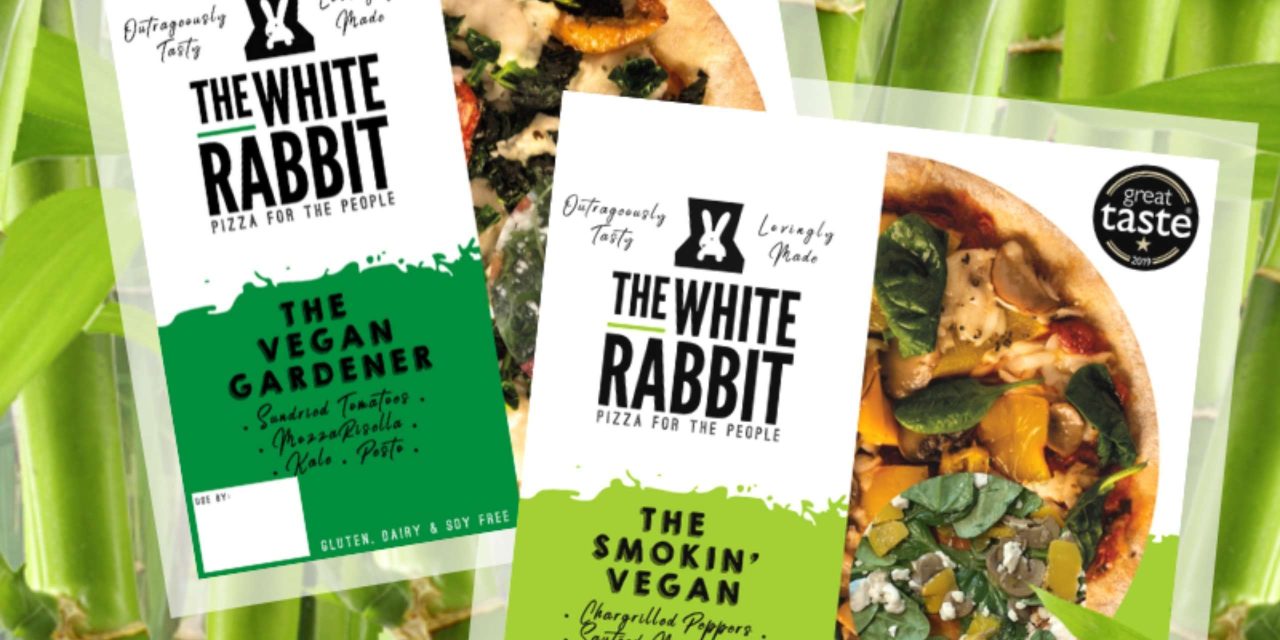
So, as the demand for more eco-friendly food packaging materials continues to grow, bakery brands have started to implement strategies to enable a shift towards more sustainable packaging practices. The White Rabbit Pizza Company, for example, specialises in the creation of alternative pizzas with a ‘free from’ range that includes vegetarian, vegan, gluten free, soy free and dairy free savoury offerings.
A shrink film layer is a necessary evil on pizzas, to help avoid waste by keeping the product fresher for longer. However, White Rabbit wanted to find the most eco-friendly wrap possible and approached Yorkshire Packaging Solutions (YPS) who recommended its B-NAT bio-sourced shrink film, a polyolefin comprised of more than 40% sugarcane ethylene. This renewable by-product of normal sugarcane production is ethically cultivated and fully recyclable, yet delivers the required optics and high shrinkage to ensure a well-protected and well-presented pizza. After successful film trials of the material on The White Rabbit’s existing shrink-wrapping lines, the company placed its first order for film. By switching to B-NAT from traditional polymer shrink films, the company has calculated that it will save around 18,700kg of CO2 emissions each year.
Commenting on the solution, Matteo Ferrari, Co-Founder at The White Rabbit Pizza Co says: “We are always looking for ways to make our packaging more environmentally friendly. We use cardboard pizza discs instead of polystyrene and fully recyclable cardboard boxes, so the sugarcane plastic is totally in keeping with our ethos and mission to be greener.”
From tubs to flow-wrap
Fitbakes started life in founder Ella Rauen-Prestes’ kitchen in 2018 as round, low sugar, high protein, reduced calorie bite-sized cakes packaged in a tub with lidding film and a cardboard sleeve. Due to the success of the product, Fitbakes production needed to be moved to a third-party baking and packaging facility. At the time of the move, Fitbakes changed the cake format from round pieces to square cakes so the company also needed to consider new packaging options.
Fitbakes spoke to Constantia FFP to help it develop a sustainable packaging solution that would portray a natural, yet premium look and feel and would be robust and durable enough to withstand the logistics supply chain while giving the product at least 30 days shelf-life. As the products were sold online and in supermarkets, they needed to be easy to merchandise and branding needed to be consistent and vibrant for shelf appeal. The cakes were going to be packaged as a four- pack, with six flavour offerings.
FFP was able to develop a flow wrap solution made of paper, laminated to a pearlised orientated polypropylene (OPP), a type of plastic film that is stretched in one direction, so the microscopic fibres are aligned. This helps with strength and creates a clear plastic film.
The paper outer gives the product the desired natural premium look, while the OPP layer has eliminated any product show-through. It has also offered enhanced durability and ensures a long shelf-life. By moving to a flow wrap solution from a tub, lidding film and sleeve solution, Fitbakes has significantly improved its offering on both an environmental and commercial level. Commenting on the project, Ella Rauen-Prestes says: “Moving our production to a third-party, was a huge milestone for us and a reflection of the success of the brand in the marketplace. Finding the right packaging partner to develop a solution that provided the functionality we required while maintaining the brand’s integrity was paramount. The change has also enabled us to streamline our processes and strengthen our sustainable credentials.”
Moving to an automated packaging process has also made the packaging process faster, less labour intensive and ultimately more efficient. This, along with the overall reduction in the volume of packaging required, means the new packs are more economical to produce and Fitbakes now has the capability and capacity to produce larger volumes to meet consumer demand.
The company also identified an opportunity within the growing food-to-go market sector for a smaller ‘twin-pack’ product. The smaller pack format would be merchandised easily on-shelf and provide consumers with a guilt free snacking option that could be eaten on-the-go. The packaging that FFP had produced for the four-pack, lent itself well to the new project and was easily scaled down in size to accommodate the new ‘twin-pack’ offering.
Paper for chocolate bar packaging
The latest chocolate bars from Leipzig-based chocolate manufacturer, nucao are not only organic, vegan, and fair trade, they also use 100% paper packaging after teaming up with Koehler Paper.
Nucao has always taken a 360° sustainability approach to its chocolate bars. It not only advocates for a deforestation-free supply chain and fair remuneration for cocoa farmer families, but it is also taking a stand in the fight against plastic waste by moving eco-friendly packaging. Mathias Tholey, Co-Founder at nucao, says: “Many chocolate manufacturers focus on one green attribute, but fair trade, organic, or vegan alone is not enough to ensure your business is truly sustainable today. You need the full package!”
The Koehler NexPlus Advanced flexible packaging paper is able to provide protection for the chocolate thanks to its oxygen, mineral oil, and grease barrier properties.
When developing this flexible packaging paper, the focus was on making it recyclable while ensuring it also offered suitable product protection. As a result, the paper can be recycled as part of a standard paper recycling process and can often be reused. This is also certified by the Papiertechnische Stiftung (PTS, Paper Technology Foundation) and environmental service provider Interseroh.”
There can be no doubting the need for bakeries to review their packaging options. Today packaging material providers are able to offer many more ‘sustainable’ solutions. It may cost a bit more, but reports show that consumers are willing to pay more for environmentally-friendly options today. Whichever route is taken; however, it is important to ensure that existing packaging equipment is able to work efficiently with any new materials chosen.
Editorial contact:
Editor: Kiran Grewal kgrewal@kennedys.co.uk