Reformulation, wellness, and consumer trust dictate success in the food sector, and Lesaffre has made a timely and strategic statement: bread, with its roots in tradition, still holds untapped potential for growth, particularly when aligned with health and nutrition trends.
At the iba 2025 trade show in Düsseldorf, Lesaffre’s keynote titled “Is Nutrition & Health a Leverage for Growth?”brought together insights from Sandrine Cuisenier, Director of Marketing and Consumer Insight, and Léa Ribet, Research & Nutrition Science Manager. Kennedy’s Bakery Production’s Editor, Kiran Grewal, reports from the event:
Global insights
Lesaffre opened with data from its 2024 global consumer study, an ambitious effort for a company traditionally focused on fermentation and ingredients rather than direct-to-consumer products.
“We performed a very large-scale consumer study… across 11 countries, five continents, 22 focus groups, and over 11,000 interviews,” said Sandrine Cuisenier. “Our goal was to understand bread’s place in people’s lives.”
Findings revealed bread remains a daily staple across diverse markets. “More than one in two consumers eat bread at least once a day,” she noted. In Japan, 84% reported daily consumption. Even in lower-frequency markets like the U.S., bread still contributes significantly to daily diets.
Science says bread is underrated
While perceptions matter, scientific validation remains critical, especially for B2B manufacturers, formulators, and brand owners navigating complex consumer health claims. That’s where Léa Ribet’s work comes in.
“We published an extensive review in Critical Reviews in Food Science and Nutrition, analysing over 2,000 articles; more than 200 of which were observational or clinical studies,” Ribet explained.
One consistent finding was that bread is a meaningful contributor to energy intake. “In the U.S., bread accounts for about 8% of total energy intake; in some countries, it reaches up to 30%,” she noted. “It’s a dietary pillar, especially in low-income regions where it’s sometimes the second-largest energy contributor after meat.”
Contrary to popular belief, Ribet said the science shows no definitive link between bread consumption and negative health outcomes. “We found no clear association with obesity, diabetes, or cardiovascular disease,” she said, pointing out that variability in recipes and co-consumed foods makes isolating bread’s impact complex.
However, not all breads are created equal. “Wholegrain varieties are associated with positive outcomes, particularly for digestive and cardiovascular health,” she added. “We’re confident about the benefits of fibre-rich breads.”
Function meets flavour
For businesses operating at the intersection of indulgence and wellness, such as those in confectionery and sweet bakery, the message was that health-aligned bread doesn’t require sacrificing taste.
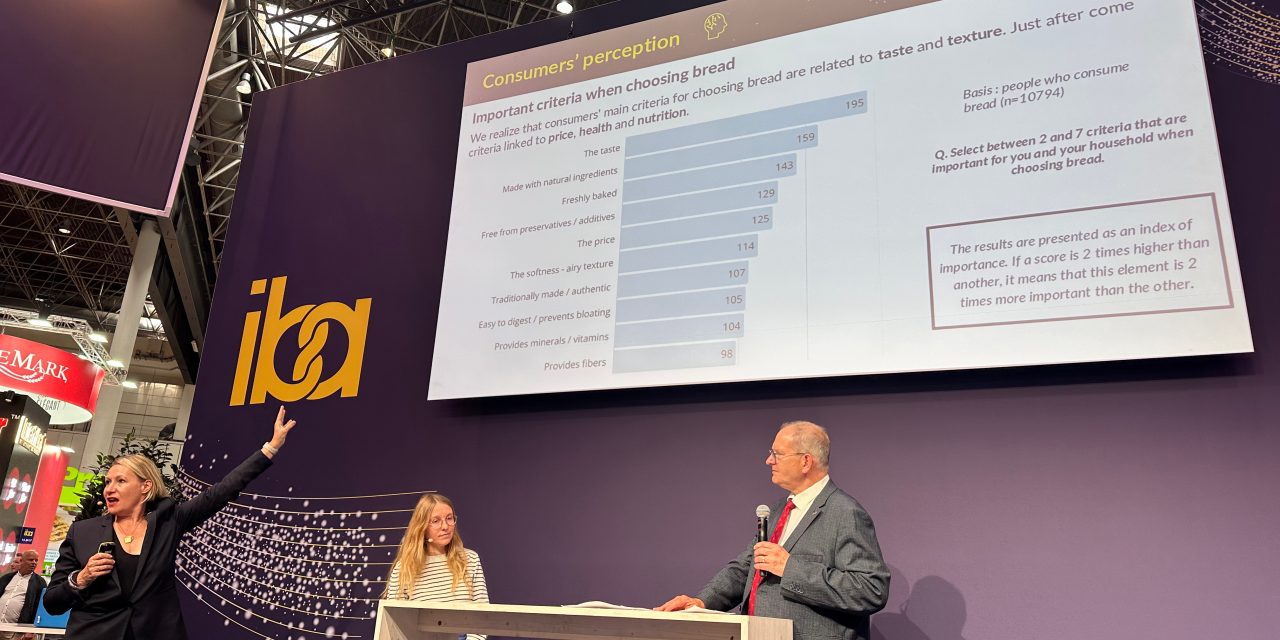
“There is still space for progress,” said Cuisenier. “Seventy-four percent of consumers want bread that’s easier to digest. Seventy-three percent want bread that provides enough energy to power them through the day.”
That’s a clear call to action for ingredient companies and finished product manufacturers alike. “Taste still comes first,” she acknowledged, “but consumers are looking for nutritional benefits, fibre, energy, simplicity, naturalness, without losing the sensory pleasure.”
Strategic levers for product development
From a formulation perspective, Ribet identified specific development avenues for future-ready bakery products: “We can reduce salt to align with cardiovascular health goals. We can also fortify bread with key micronutrients and diversify the grain base beyond wheat.”
Ribet also emphasised the untapped potential of reformulated breads as part of better-for-you snacking portfolios. “Bread provides more than just calories. In our analysis, it delivered twice the fibre and vitamin B content relative to its caloric contribution,” she said. “It also supplies at least 8% of daily recommended nutrient intake.”
As the keynote closed, Lesaffre left the audience with a business-savvy takeaway: “Bread remains a simple, accessible, and culturally-rooted product. But it’s also adaptable,” said Cuisenier. “The perception is strong. The scientific foundation is there. And the expectations for innovation are growing.”
Editorial contact:
Editor: Kiran Grewal kgrewal@kennedys.co.uk