The collective efforts of four prominent companies in the Norwegian food industry have culminated in a concerted push towards sustainability. Kiran Grewal reports.
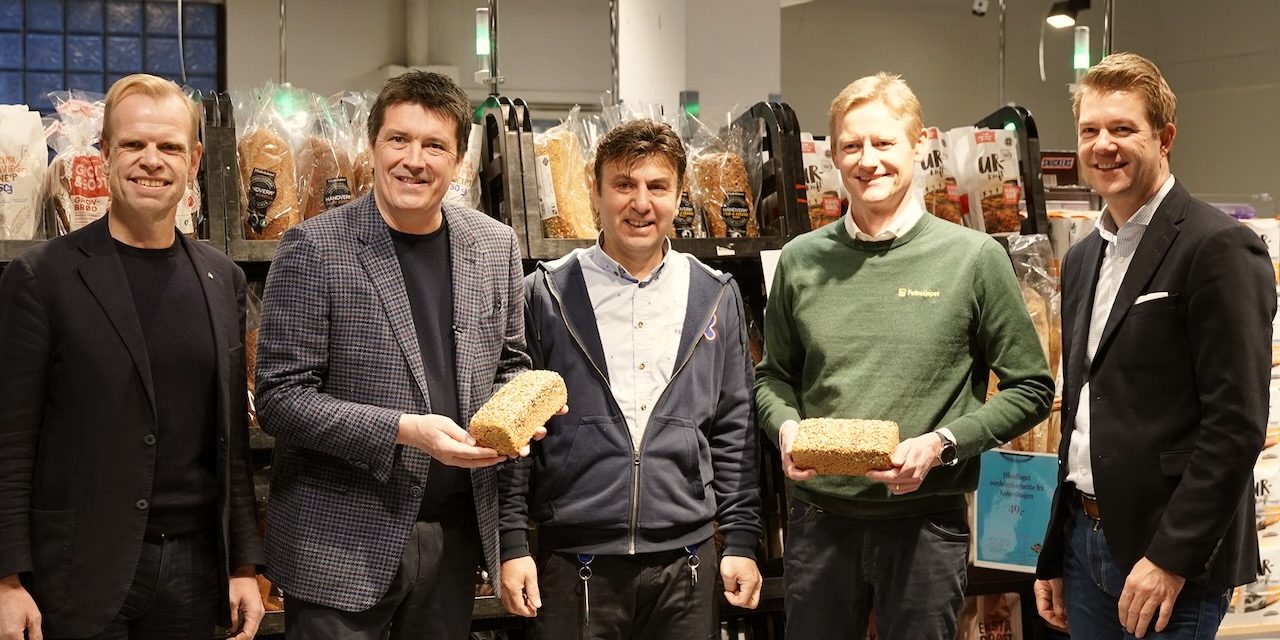
Showcasing the potential avenues towards sustainable food production, a collaboration has emerged between industry giants Reitan Retail, Norgesmøllene, Felleskjøpet Agri, and Yara. Together, these key players in the Norwegian food value chain are revolutionising bread production, starting with a focus on oat-based products. Their shared goal? To craft delicious, healthy loaves with a significantly reduced carbon footprint. Here, Kennedy’s Bakery Production looks into the innovative partnership driving this initiative, highlighting the transformative potential it holds for the future of eco-conscious baking in Norway.
The collective efforts of four prominent companies in the Norwegian food industry have culminated in a concerted push towards sustainability. Through a signed letter of intent, these companies have pledged to reduce emissions across the entirety of Norwegian food production, extending from the creation of fertilisers to the finalisation of food products.
Their strategy involves a multifaceted approach, incorporating the use of mineral fertilisers produced via electrolysis and renewable energy sources, alongside the adoption of enhanced agronomic practices and the integration of precision farming tools.
At the forefront of this initiative is the introduction of oats as the inaugural product, promising a remarkable reduction of 25-30 percent in carbon footprint compared to oats cultivated with traditional mineral fertilisers. With an eye towards the future, these companies are setting their sights on producing an oat-based bread, slated to grace the shelves of REMA 1000 stores by the year 2025.
The four companies represent the majority of the food value chain for grain. This process spans from the production of mineral fertilisers and cultivation in the field, to the production of flour and grain products, culminating in the delivery of finished goods sold to the consumer. Oats will be the first grains to have a carbon footprint reduction of 25 to 30 percent compared to regular oats.
With an optimistic outlook on the coming season, the companies aim for a bread that is healthy, tasty and affordable, and made from oats.
“Finally, we can bring together the majority of the food value chain to reduce the carbon footprint of food, from farm to fork,” says Svein Tore Holsether, President and CEO of Yara. “The food system accounts for a third of global emissions, and it is not possible to reach the goals of the Paris Agreement without decarbonising food production. With a growing population, we need to produce more food in a sustainable way. This collaboration marks an important step in the right direction.”
Ole Robert Reitan, CEO of Reitan Retail, says REMA 1000, with close to 700 discount grocery stores in Norway, is committed to facilitating informed and responsible choices for customers. However, he underlines that the biggest results from carbon footprint reduction, can only be achieved by collaborating across the value chain.
“Our ambition is to make bread with a lower carbon footprint, that is also healthy, tasty and affordable. It is impossible to succeed with such a project on your own. We need to collaborate throughout the value chain by sharing data and knowledge, and implementing actions that are in the best interests of all. Now we will all collaborate across the value chain and use Norwegian high-quality ingredients from innovative farmers. That is very exciting,” says Ole Robert Reitan.
Felleskjøpet, an agricultural cooperative owned by 37,500 Norwegian farmers, distributes mineral fertiliser to farmers all over the country and serves as the market regulator for grain. They buy and sell grain from the farmers and are also an important supplier of technology and equipment to the agricultural sector.
“Norwegians expect their food to be pure and of high quality, and the food value chain that delivers them keeps the same standard. At the same time, Norwegian agriculture has committed to major emission cuts as part of the Norwegian agricultural climate agreement. If the industry is to succeed with major greenhouse gas reductions, while at the same time strengthening self-sufficiency, cooperation between the different players is necessary. Our role is to represent Norwegian farmers and be open to business models and collaboration that ensures the involvement of all parties,” says Svenn Ivar Fure, CEO of Felleskjøpet.
In this collaborative effort of uniting the bread food chain, the ambition is to reduce the costs from decarbonisation for both farmers and consumers. The milling group Norgesmøllene, recognized for its brand “Møllerens”, produces flour, grain, bread and bakery products in Norway, and is committed to giving consumers the opportunity to make lower carbon choices in the supermarket.
“We are excited to work together to get this bread out to the store shelves, and soon everyone who bakes at home will have the opportunity to choose grain products with a reduced carbon footprint,” says Jan-Eirik Eikeland, CEO of Norgesmøllene.
In addition to Norway’s first food project involving fertiliser produced with electrolysis of water and renewable energy, the companies want to reduce their climate footprint on all levels. This could include optimising agricultural methods, precision tools for more accurate farming, use of agricultural inputs, a transition to more low-emission transportation, as well as methods for measuring and recording carbon footprint.
“This project is a good example of collaboration to reach climate goals and can form a template for how other companies in different parts of the value chain can also collaborate,” says Petter Haas Brubakk, CEO of Food Drink Norway, The confederation of Norwegian Enterprise.
Strong demand for more sustainable food in Norway
In a European survey conducted by IPSOS on behalf of Yara, 65% of Norwegians said that food producers should work to reduce emissions, with 73% saying that farmers should be given incentives to implement more sustainable farming practices. Over half of Norwegians also wanted clear labelling of the carbon footprint on the food they buy.
By collaborating across the value chain, the companies will facilitate food production with a reduced carbon footprint and at the same time promote Norwegian grain production.
In conclusion, the innovative collaboration among industry leaders in Norway’s bakery market marks a significant stride towards sustainable solutions in food production. By bringing together giants like Reitan Retail, Norgesmøllene, Felleskjøpet Agri, and Yara, this partnership demonstrates a unified commitment to reducing the carbon footprint of bread production. The focus on oat-based products serves as a pioneering step, showcasing a potential reduction of 25-30 percent in carbon emissions compared to traditional methods.
This collaborative effort not only addresses environmental concerns but also responds to consumer demands for sustainable food choices. This initiative sets a precedent for future collaborations across different sectors of the food industry, illustrating how shared goals and concerted efforts can drive positive change. Ultimately, by prioritising sustainability and innovation, these companies are paving the way for a more environmentally friendly and socially responsible approach to food production in not just Norway, but beyond.
Editorial contact:
Editor: Kiran Grewal kgrewal@kennedys.co.uk