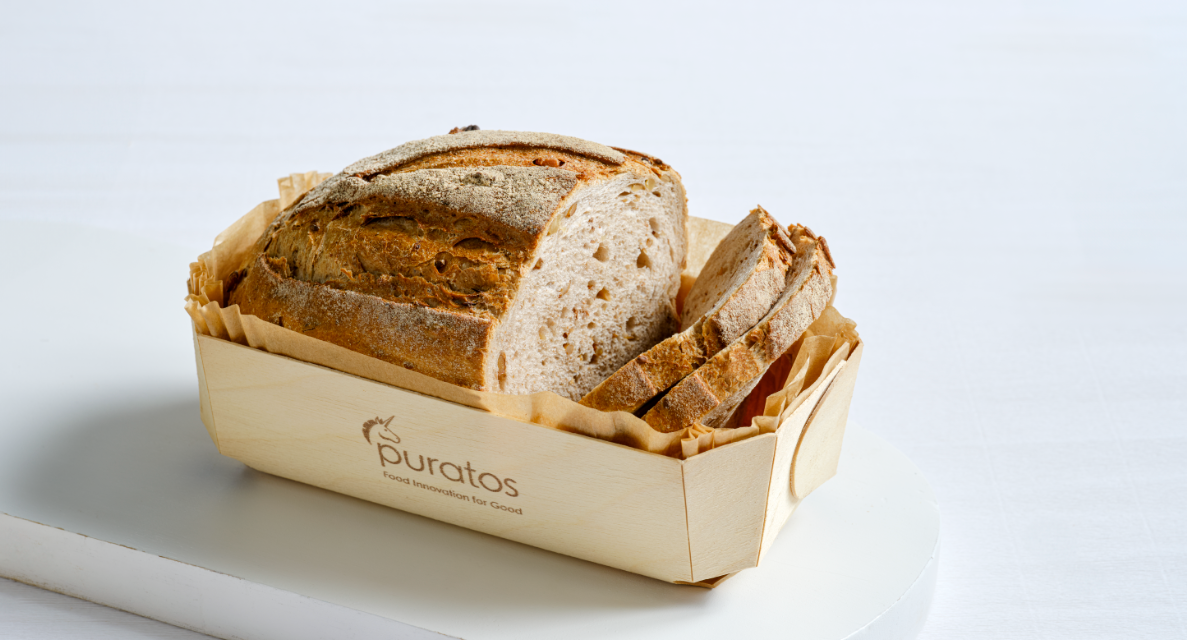
Puratos and the Free University of Bozen-Bolzano share breakthrough research findings on pulse-based sourdough. The influential new study shows that breads deliver 45% more protein, an improved amino acid profile, and potentially enhanced gut health benefits compared to traditional wholewheat bread made with baker’s yeast.
The study also found that fermentation in pulse-based sourdoughs reduces antinutritional factors, supporting digestive comfort, while boosting polyphenols that enhance antioxidant and anti-inflammatory benefits. From a sensory perspective, the findings showed pulse-based sourdoughs produced enhanced flavor and aroma. These results underscore the potential of fermenting plant-based ingredients like pulses to redefine functional bakery innovation.
Research was carried out by the HealthFerm Consortium, of which both Puratos and the university are members. HealthFerm is a joint European / Swiss research project investigating innovative pulse-based food fermentations. This project focused on pulse-based flours, including faba (or broad) bean flour, faba bean protein concentrate, and yellow pea flour, together with several lactic acid bacteria (LAB) and yeast pairings, with the aim of uncovering new, optimized bread formulations. Of 288 starter-initiated sourdoughs, 17 were shortlisted for transition to fully stable sourdoughs, which have markedly better microbiological maturity and functionality. Six of these emerged as the most promising, showing not only higher protein content but also improved amino acid balance and elevated levels of bioactive compounds such as gamma-aminobutyric acid (GABA) and lysine, both linked to metabolic and cognitive health.
“Fermentation plays an essential role in improving the nutritional quality, functionality, and sensory appeal of sourdough, but we wanted to see how we could push the boundaries further still by using wheat flour alternatives,” comments Prof. Marco Gobbetti, co-author of the study and Professor of Food Microbiology at the Free University of Bozen-Bolzano. “What is interesting is that sourdough is not typically considered a high protein source, so our findings represent a real breakthrough for the bakery sector. This new discovery could usher in a new age of sourdough by inspiring bakers to adopt different fermentation and plant-based strategies.”
In addition, the study found that fermentation produced a diverse range of volatile organic compounds (VOCs), giving the breads enhanced aroma profiles and strong sensory appeal. Specific LAB-yeast consortia drove the fermentation, enhancing not only the protein quality but also the bioactive compound release, highlighting the potential of microbial innovation in creating appealing, functional leavened bakery products. These findings align with growing consumer interest in health, taste, plant-based options, and sustainability, signaling an opportunity to tap into this rapidly-developing market.
“Gut health has always been a cornerstone of our product development, especially as more consumers recognize its benefits within a holistic approach to well-being,” comments Dr. Vimac Nolla Ardèvol, co-author of the study and Research Manager Metabolomics at Puratos. “That’s why we continue to invest in science-backed open innovation to uncover and create new food solutions that ‘do more’. Consumers increasingly want to eat naturally, healthily, and sustainably, and at both the HealthFerm Consortium and Puratos, we believe there’s a bright future in fermented bakery products with gut health benefits.”
For more information on HealthFerm Consortium, visit: https://www.healthferm.eu/about
Or find out more about Puratos’s great-tasting, healthier sourdough solutions by visiting https://www.puratos.com/commitments/health-and-wellbeing
Editorial contact:
Editor: Kiran Grewal kgrewal@kennedys.co.uk